
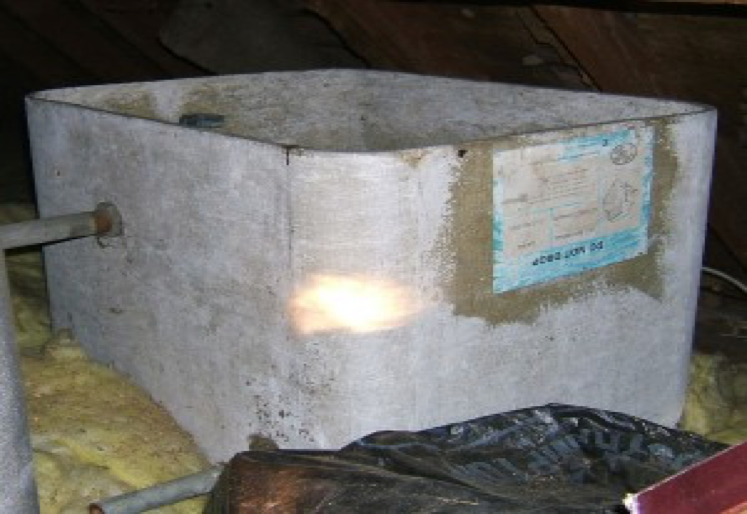
Why it's so hard to spot
Asbestos was mixed into other materials, such as cement, plaster, plastic and boards. The fibres are far too small to see. A material that contains it can look exactly like one that doesn't.
Only a laboratory can say for certain, which is why we take a small sample when we test.
Where it is commonly found
In homes built or refurbished before 2000, the usual places are corrugated cement roofs on garages and sheds, flat cement panels, soffits and fascias, flue pipes, cold water tanks, textured ceiling coatings such as Artex, and old vinyl floor tiles and their adhesive.
In older properties you can also find it in pipe lagging, boiler casings, insulating board around fuse boxes or in airing cupboards, and in the cement or fibre panels around windows.
Clues that are worth noting
Grey, wavy cement sheets. Flat grey or off-white boards with a slightly rough, matt surface. Heavily textured ceilings that were applied in swirls or stipples. Old 9-inch square floor tiles in dark colours. A building or fitting that dates from before 2000.
These are clues and not proof. Treat anything suspicious as if it might contain asbestos until you know otherwise.
What to do if you're unsure
Leave it alone. Don't drill, scrape, sand or break it. Intact material in good condition is usually low risk, and the danger comes from disturbing it.
Take a clear photo from a few feet away and send it to us on WhatsApp. We'll tell you what it looks like and whether a test is sensible. Never take a sample of your own from a material you suspect.
Want a professional to look?
Send us a photo or ask for a free quote. We'll tell you honestly what we think.