
What the terms mean
In Great Britain, the type of asbestos material and how it's disturbed decide whether the work needs a licence from the Health and Safety Executive. The rules sit in the Control of Asbestos Regulations 2012.
Licensed work is the higher-risk group. It generally covers materials that release fibres more easily, such as sprayed coatings, pipe and boiler lagging and most asbestos insulating board. Only a contractor holding an HSE licence may carry it out.
Non-licensed work
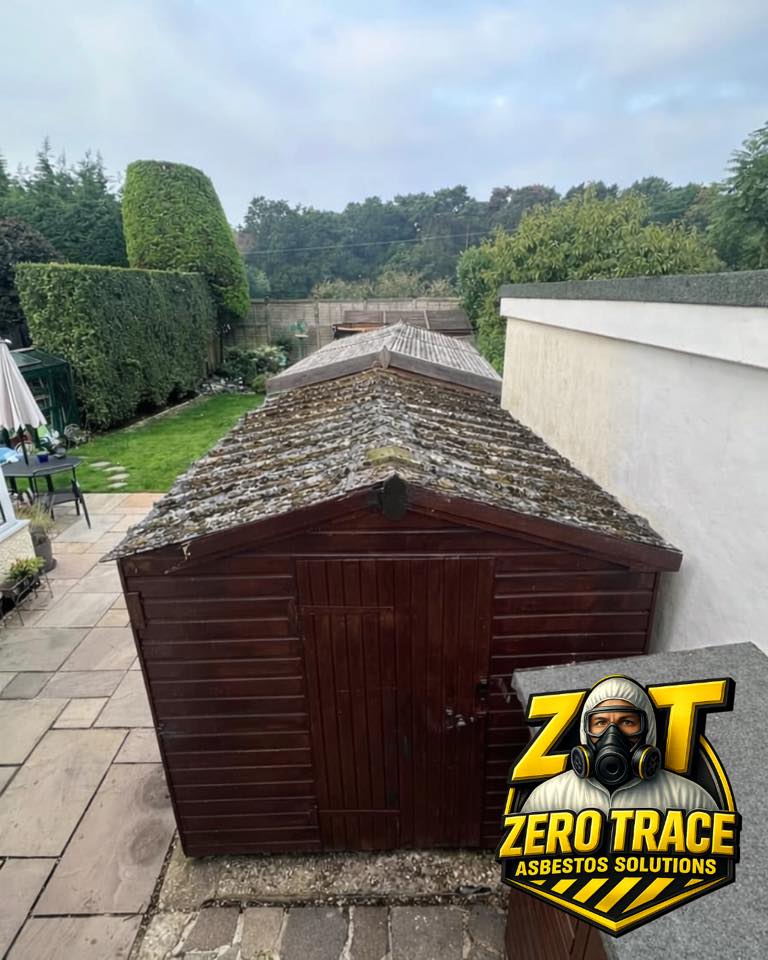
Non-licensed work covers lower-risk materials, such as asbestos cement roofing and cladding, many textured coatings, floor tiles and bitumen products. A trained contractor can do it without an HSE licence, as long as the correct controls are used.
'Non-licensed' doesn't mean 'unregulated' or 'safe to do without care'. It still needs trained people, the right protective equipment, controlled methods, safe disposal and proper records. Some non-licensed jobs also have to be notified to the regulator.
How to tell which one you have
You can't tell by looking, and the category depends on the material, its condition and the type of work. The starting point is a sample, analysed by a UKAS-accredited laboratory, and an assessment of the job.
If a contractor tells you a job is non-licensed, ask why. A good one will explain the material, the method and the checks that apply.
What to ask a contractor
Ask about their training, such as UKATA certification, and whether they will take a sample first. Ask how the waste is carried and disposed of, and whether you'll get a hazardous waste consignment note afterwards. Ask for the details in writing.
If anything points to a licensed material, such as lagging, spray coating or insulating board, a non-licensed contractor should tell you so and stop. We do non-licensed work only. If a job needs a licence, we'll say so and point you in the right direction.
Want a professional to look?
Send us a photo or ask for a free quote. We'll tell you honestly what we think.